


A Low CIBIL Score can be concerning, especially when you are planning to apply for a home loan, personal loan, business loan or credit card. However, instead of immediately searching for ways to increase the score, it is important to first understand what may be affecting your credit profile.
Your credit score is based on information contained in your credit history. Payment behaviour, credit usage and the way you manage different credit facilities can all play a role.
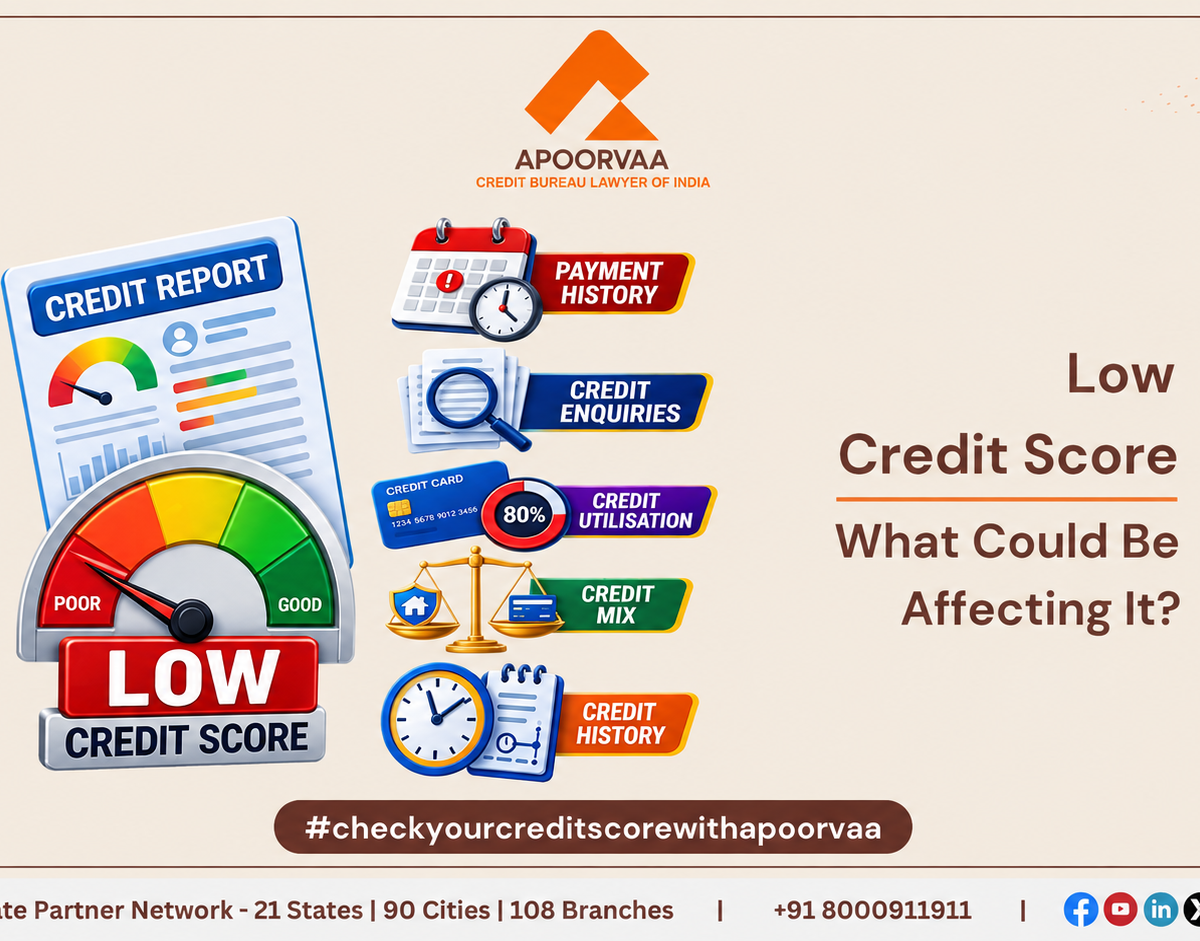
Here are five common factors worth understanding.
1. Delayed Loan or Credit Card Payments
Repayment history is an important part of your credit profile.
When you take a loan, you are expected to pay the EMI according to the agreed schedule. Similarly, credit card payments need to be managed within the applicable payment cycle.
If payments are repeatedly delayed, the repayment history reported against those accounts can affect your credit profile.
Your credit report may also contain DPD (Days Past Due) information showing payment delays for particular reporting periods.
For example, depending on the reporting:
- 000 generally indicates no days past due.
- 30 DPD indicates a payment delay of around 30 days.
- 60 DPD represents a longer delay.
- 90 DPD indicates a more serious delinquency.
This is why checking only the score is not enough. Reviewing the payment history of individual accounts can provide better clarity.
2. Frequent Credit Enquiries
Applying for several loans or credit cards within a short period can result in multiple credit enquiries.
For example, suppose your loan application is rejected by one lender.
You immediately apply with another bank, then another NBFC and then two more lenders.
Each new credit application may result in a lender checking your credit report, adding enquiries to your credit profile.
Instead of repeatedly applying after a rejection, it may be better to first understand your existing credit position and eligibility.
It is also important to distinguish these lender enquiries from checking your own credit report.
Reviewing your own credit information to monitor your credit health is different from repeatedly applying for new credit facilities.
3. High Credit Utilisation
Credit utilisation is another factor to understand, particularly if you regularly use credit cards.
It broadly refers to how much of your available revolving credit you are using.
Suppose your credit card has a limit of ₹1,00,000.
If you regularly use a very large portion of that available limit, your utilisation remains high.
Even when payments are being made, consistently depending on a significant portion of available credit can influence the overall credit profile.
This does not mean you should immediately obtain additional credit cards simply to increase your available limit.
A better approach is to use credit according to your genuine financial requirements and repayment capacity.
Credit Utilisation and Unsecured Loans Are Different
These two terms are sometimes confused.
Credit utilisation generally relates to the proportion of available revolving credit being used, particularly on credit cards.
Unsecured borrowing refers to loans or credit facilities that are generally not backed by specific collateral, such as personal loans and credit cards.
A person may therefore have high credit utilisation, substantial unsecured borrowing, or both.
The complete credit profile needs to be considered rather than relying on one number.
4. Credit Mix
Your credit profile may contain different types of borrowing.
These can broadly include secured and unsecured credit.
Secured credit may include facilities such as home loans or certain other asset-backed loans.
Unsecured credit may include personal loans, credit cards and other facilities without specific collateral.
The nature and mix of credit facilities can form part of the overall credit profile.
However, this should not be interpreted as a reason to take unnecessary loans.
If you have only one type of credit, you do not need to immediately borrow money simply to create a different credit mix.
Every loan creates an EMI obligation and interest cost.
Borrowing should be based on genuine financial requirements, not simply an attempt to influence a credit score.
5. Short Credit History
The length of your credit history can also be relevant.
Consider someone who received their first credit card only a few months ago.
Even if all payments have been made properly, the person’s credit history is still relatively new.
Compare this with someone who has responsibly managed credit facilities for several years.
The second profile provides a longer record of credit behaviour.
A short credit history does not mean that someone is a bad borrower. It may simply mean that there is limited historical credit information available.
There is also no need to take multiple loans simply to build history quickly.
Credit history develops naturally over time through responsible use and repayment.
Understanding the Complete Credit Report
These five factors can help explain why a credit score may be lower than expected, but every borrower’s credit profile is different.
One person may have recent payment delays.
Another may have high credit utilisation.
Someone else may have several recent enquiries or only a short credit history.
A credit report may also contain other information that requires attention, such as an overdue account, settlement-related reporting, an unfamiliar credit facility or information that appears inaccurate.
This is why the complete credit report should be reviewed instead of looking only at the three-digit score.
What Should You Check If Your CIBIL Score Is Low?
Start with your latest credit report and review it systematically.
Check:
- Every loan and credit card account.
- Repayment history and DPD.
- Outstanding and overdue balances.
- Credit card utilisation.
- Recent credit enquiries.
- Secured and unsecured credit facilities.
- Age of your credit accounts.
- Account status and other reported information.
Also verify whether all the information actually belongs to you and is being reported accurately.
If information is genuinely incorrect, it can be taken up through the appropriate dispute and lender-verification process.
However, genuine negative information should not be treated as an error merely because it is affecting the score.
Common Mistakes to Avoid
When people discover a Low CIBIL Score, they sometimes make decisions that can create additional problems.
Avoid:
- Applying with multiple lenders immediately after rejection.
- Looking only at the score and ignoring the report.
- Taking unnecessary loans simply to create credit history.
- Raising disputes against accurate information.
- Ignoring current EMI or credit card payment problems.
- Believing promises of guaranteed or instant score improvement.
The appropriate solution depends on the actual reason behind the credit profile.
Key Takeaway
A Low CIBIL Score should be understood before you try to improve it.
Five common factors to review are:
✔ Delayed loan or credit card payments.
✔ Frequent credit enquiries.
✔ High credit utilisation.
✔ Credit mix.
✔ Short credit history.
The most important step is to review the complete credit report, identify what is actually affecting your profile and verify whether the reported information is accurate.
Responsible repayment behaviour, appropriate use of credit and regular review of your credit report can help you maintain a healthier credit profile over time.
Educational Note
This article is published for financial awareness and educational purposes. Credit profiles differ from one borrower to another, and no single factor should be considered in isolation. Credit scores are calculated using the information available in the credit profile and the applicable scoring methodology. Borrowers should review their complete credit report and understand their individual financial circumstances before taking any credit-related decision.